



Why is it so difficult for us to deliver difficult messages?
Whether it’s giving uncomfortable feedback, announcing a role change, or saying goodbye to an employee – sooner or later, every leader faces the task of delivering a difficult message. And this is where inner tension arises: on the one hand, you want to communicate honestly and clearly. On the other hand, you don’t want to hurt your counterpart or jeopardize their trust.
This ambivalence is human and shows how deeply we wish to maintain good relationships. At the same time, responsible leadership means creating clarity even when it feels uncomfortable.

Before the conversation: mindset and intentional preparation
Self-reflection as a starting point
Ask yourself honestly: What makes this conversation difficult for me?
Preparation and creating clarity
Prepare for the conversation by formulating your core message in one clear sentence.
- What should be clear in the end?
- Which points are particularly important to you?
- And what do you want to avoid because it would only be distracting?
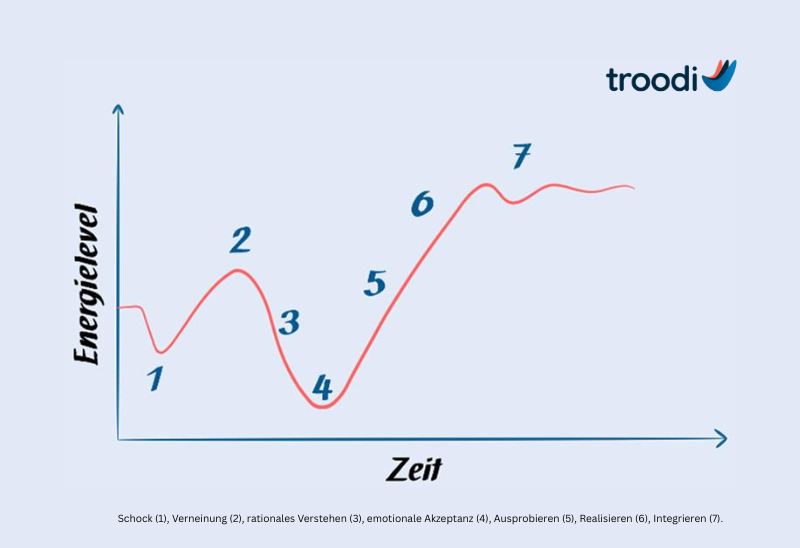
Understanding emotional dynamics
Structure as an internal guide
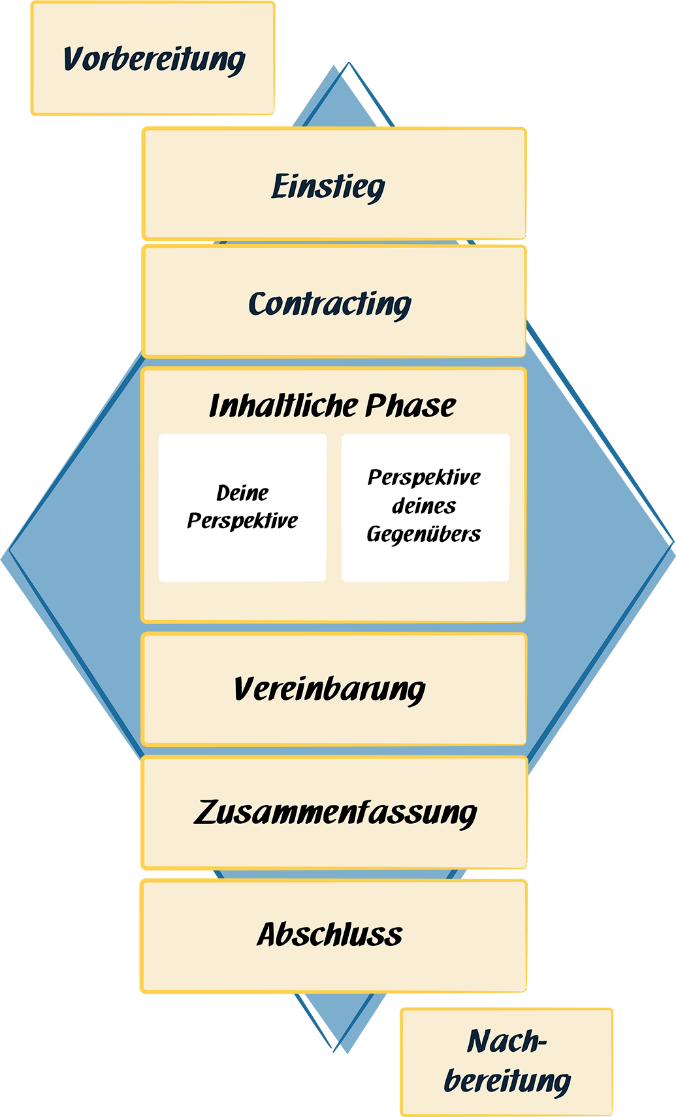
The conversation diamond reminds us that every discussion has a structure: from a deliberate opening, through a clear core, to a respectful conclusion.
During the conversation: Clarity meets empathy
Honesty as a Sign of Respect
Maintain presence and calm
Allow emotions, maintain boundaries
Your counterpart may react with sadness, anger, or withdrawal. All of this is normal. Make sure to remain empathetic while maintaining your role as the conversation leader. Trust is built when you can demonstrate both understanding and clarity.
After the conversation: Maintaining trust
Provide orientation
Remain accessible
Self-reflection
It’s also worthwhile for you to take a brief look back:
- What went well for you?
- Where were you uncertain?
- Which reaction surprised you?
When many are affected: Communication within the team
Sometimes a message affects not just one person, but an entire team. Such situations require special attention.
Clarify in advance which information is already confirmed and which is still pending. Consider who should learn what, and when. The sequence can be crucial. The more transparently you proceed here, the more likely trust will be maintained.
Delivering difficult messages with composure and clarity
Difficult conversations are part of the workdayThey are not a sign of failure, but an expression of responsibility. Those who combine poise, clarity, and empathy can strengthen trust even in challenging moments. Clarity requires courage and is a form of appreciation .