


Delivering Difficult Messages

Icon_Calendar

January 30, 2026

Leaders can deliver difficult messages in a way that maintains clarity, empathy, and trust. Preparation, mindset, structured communication, and reflection form the foundation for confident action in challenging situations and help strengthen team collaboration.

Why is it so difficult for us to deliver difficult messages?

Whether it’s giving uncomfortable feedback, announcing a role change, or saying goodbye to an employee – sooner or later, every leader faces the task of delivering a difficult message. And this is where inner tension arises: on the one hand, you want to communicate honestly and clearly. On the other hand, you don’t want to… hurt your counterpart or jeopardize their trust.

This ambivalence is human and shows how deeply we wish to maintain good relationships. At the same time, responsible leadership means creating clarity even when it feels uncomfortable.

The goal of this article is to offer you insights on how to consciously navigate such situations — with clarity, empathy, and without losing yourself in the process.

Before the conversation: mindset and intentional preparation

A difficult conversation begins long before you enter the room. The way you prepare determines how clear, calm, and authentic you appear.

Self-reflection as a starting point

Ask yourself honestly: What makes this conversation difficult for me?

Often, there’s more behind it than just the content itself, perhaps a personal value that’s being challenged, or the fear of being rejected. By acknowledging these emotions, you can better understand and manage them instead of unconsciously carrying them into the conversation. Even small mental routines can help: pause briefly, take a deep breath, straighten your posture. This creates distance from your own tension — not from the topic itself, but from your inner nervousness.

Preparation and creating clarity

Prepare for the conversation by formulating your core message in one clear sentence.

  • What should be clear in the end?
  • Which points are particularly important to you?
  • And what do you want to avoid because it would only be distracting?
A deliberate setting also supports you: choose a quiet, confidential space. Allow enough time for your counterpart to process the information. A clear introduction and a respectful conclusion provide orientation and a sense of security.

Understanding emotional dynamics

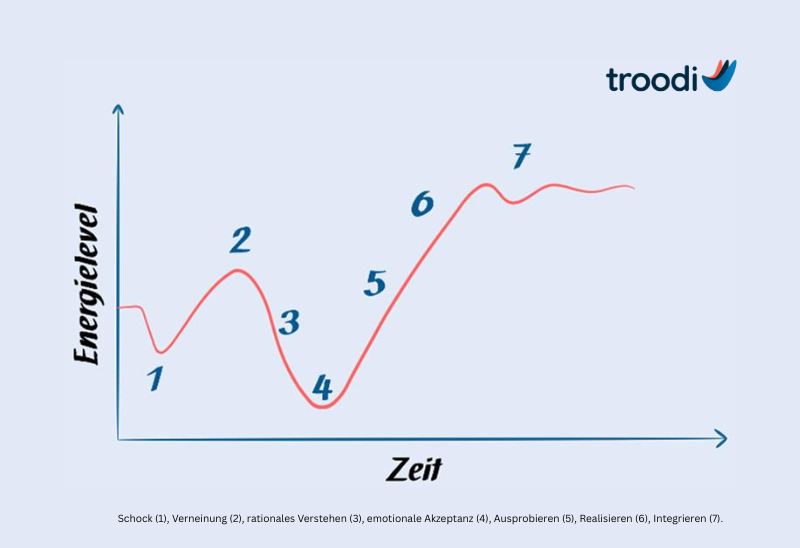
Every message triggers a reaction. People usually respond to change not in a straight line, but through emotional phases — from the initial shock to eventual acceptance. It helps to recognize that strong emotions are not a sign of weakness, but rather a natural part of the processing process.

The Change Curve It illustrates why calmness, patience, and empathy are so crucial in conversations. Understanding this dynamic helps you judge when listening is more important than explaining.

Structure as an internal guide

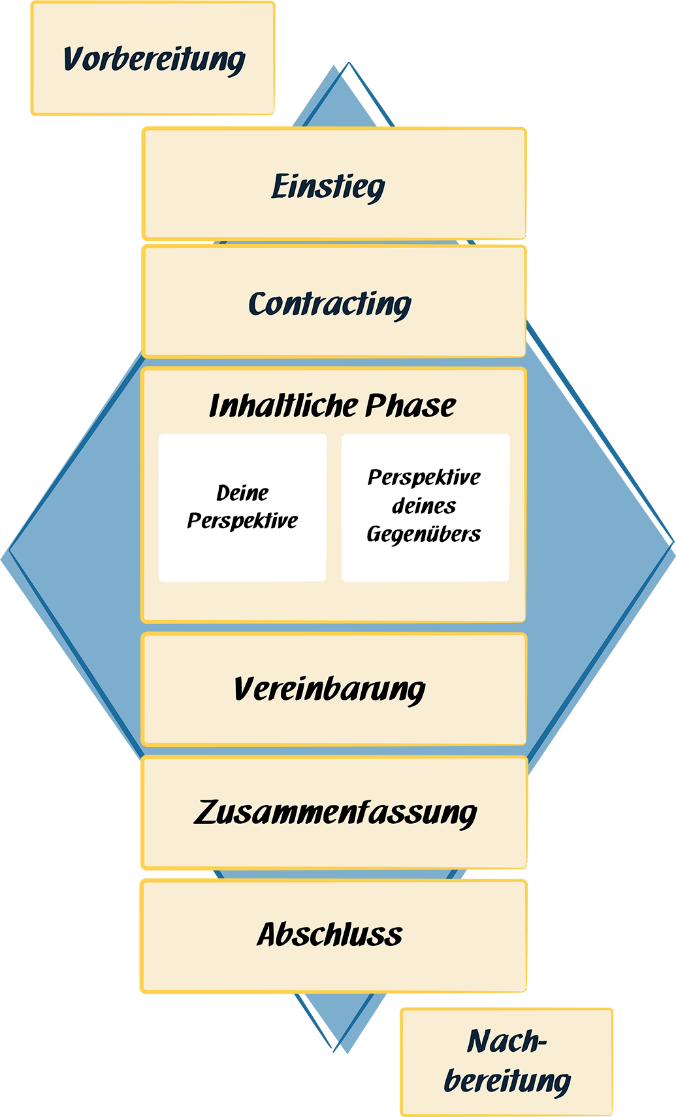
Especially in emotional moments, a clear structure provides support. It helps to be aware in advance of the introduction, core message, and conclusion. without rigidly following a script.

The conversation diamond reminds us that every discussion has a structure: from a deliberate opening, through a clear core, to a respectful conclusion.


If you want to learn more about the phases of change management and the emotional change curve, feel free to check out our blog article on change competence.

During the conversation: Clarity meets empathy

During the conversation itself, it becomes clear how mindset and preparation work together.

Honesty as a Sign of Respect


Kindness doesn’t mean softening uncomfortable truths. It is shown by remaining honest while still communicating with empathy. People can sense when something is sugarcoated, which can lead to a loss of trust.

Maintain presence and calm

Your voice, posture, and eye contact send strong signals. A calm, attentive presence conveys security—even when delivering an unpleasant message. Stay with the person in front of you, even when emotions arise. The goal is not to “solve” them, but to acknowledge them.

Allow emotions, maintain boundaries

Your counterpart may react with sadness, anger, or withdrawal. All of this is normal. Make sure to remain empathetic while maintaining your role as the conversation leader. Trust is built when you can demonstrate both understanding and clarity.

If you notice that emotions are dominating the conversation, taking a break or scheduling a follow-up meeting can help. Often, it is more effective to allow space for processing rather than pushing for an immediate response.

After the conversation: Maintaining trust

A difficult conversation doesn’t end with the last sentence. Its effects continue afterward. , for both your counterpart and yourself.

Provide orientation

Summarize the key points calmly at the end. This ensures that no misunderstandings remain. A brief follow-up conversation or a written summary can help provide orientation.

Remain accessible

Even if the message is final, your attitude signals: I remain available and in contact. An open ear or a brief check-in a few days later shows that you take responsibility.. Not only for what you said, but also for how you said it.

Self-reflection

It’s also worthwhile for you to take a brief look back:

  • What went well for you?
  • Where were you uncertain?
  • Which reaction surprised you?
This reflection strengthens your confidence for future conversations and helps you recognize patterns.

When many are affected: Communication within the team

Sometimes a message affects not just one person, but an entire team. Such situations require special attention.

Clarify in advance which information is already confirmed and which is still pending. Consider who should learn what, and when. The sequence can be crucial. The more transparently you proceed here, the more likely trust will be maintained.

During the announcement, speak clearly, avoid judgments, and stick to the facts. Afterwards, allow space for questions or brief discussion phases so that emotions can be expressed. In such moments, leadership primarily means providing guidance; you don’t need to have all the answers at hand.

Delivering difficult messages with composure and clarity

Difficult conversations are part of the workdayThey are not a sign of failure, but an expression of responsibility. Those who combine poise, clarity, and empathy can strengthen trust even in challenging moments. Clarity requires courage and is a form of appreciation .


Our training program “Delivering Difficult Messages” goes into more detail on how to handle such situations even more consciously and confidently will be able to do so. Participants Here, participants deepen how they intentionally combine stance, language, and structure in order to remain clear even in emotional moments. Take a look at the trailer and feel free to reach out if you’re interested!

Philip Klasen-Schwidetzki
Test
Philip Klasen-Schwidetzki has almost 15 years of experience as a trainer, consultant, and coach in people and organizational development. His focus is primarily on cultural development and leadership. As Managing Director of troodi, he is committed to supporting organizations in a targeted and sustainable way and to developing the full potential of their employees. Philip's academic background is in social sciences and he began his career in project management in development cooperation, conflict research, and disaster relief.

Other interesting blog posts

What is Change Competence?

What is Change Competence?

Change is no longer an exceptional state but everyday life. Digitalization, new work models, constantly changing demands: change has become the new normal. However, not everyone copes with it equally well. The challenge often lies not in the change itself but in how it is handled. This blog article examines change competence and how it can be strengthened individually.